



Possessive Noun

What is a Possessive Noun?
- It is used to show ownership of something.
- We usually add an apostrophe and a ‘s’ at the end of a noun.
Example:
- This is Sara’s bag.
- Here, we understand that Sara is the owner of the bag. Thus, the noun ‘Sara’ becomes possessive by adding an apostrophe and a ‘s’.
How do you know if a noun is possessive?
- Look out for the apostrophe and the ‘s’ to check if a noun is possessive or not.
Singular and Plural Possessive Nouns
Just like there are possessive nouns in singular form, there are also possessive nouns in plural form.
When plural nouns end in an ‘s’, add an apostrophe at the end to form a possessive noun.
- Those are my cat’s food. (Here, it is singular. Only one cat)
- Those are my cats’ food. (Here, it is plural. More than one cat)
The car’s window is broken.
All the cars’ windows are broken.

This egg’s color is weird.
The eggs’ colors are so different from each other.
The windows’ glass was broken.
The houses’ doors are all painted red.
Avoid the Confusion
An apostrophe and an ‘s’ together on some nouns can mean something else too.
They can represent a contraction, i.e., two words joined together to make one word.
- Can’t – can not
- Don’t – do not
But how do we know if ‘girl’s’ is possessive or if it is contraction?
- ‘The girl’s’ – The girl’s bag (possessive noun)
- The girl’s bag is stolen.
- ‘The girl’s’ – ‘The girl is’. (contraction)
- The girl’s smart! (The girl is smart)
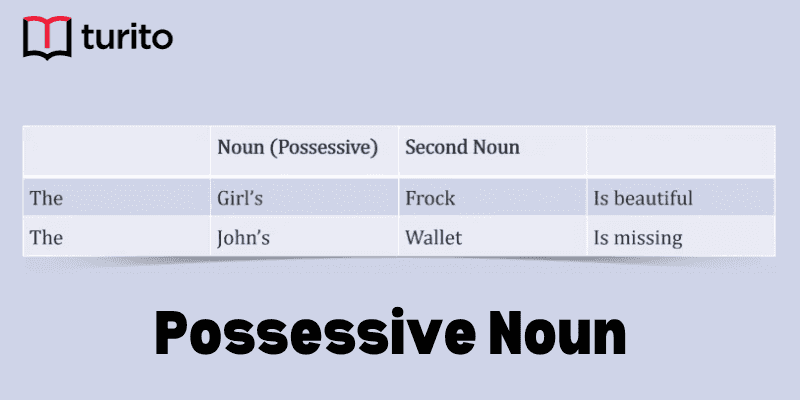
If the noun is followed by a second noun, then it is possessive.
- The girl’s frock was beautiful.
- John’s wallet is missing.
If the noun is followed by a verb, then it is contraction.
- The girl’s tired.
- John’s a great leader!
Possession

Contraction

Frequently Asked Questions (FAQ’s):
- What is a possessive noun?
A possessive noun is a noun that is used to show ownership of something.
- What are examples of possessive noun?
This is Vrinda’s car.
My brother’s friend is coming home.
My mother’s bag is red.
- How to check possessive noun?
The word that ends with an apostrophe and “s” at the end are possessive nouns.
- What is a singular possessive noun?
If the noun is singular then it is singular possessive noun.
- What is a plural possessive noun?
If the noun is plural then it is plural possessive noun.
Related topics

Informational Text – Features, Types with Examples
What is an Information Text? Any piece of writing falls under the category of fiction or non-fiction. Fiction is a work of imagination (made up story), whereas non-fiction is based on facts and actual events or real people. Informational texts are non-fiction works that inform the readers about a specific topic. They are found in […]

Figurative Language : Types and Examples
Figurative Language What is Figurative Language? A language that describes something by comparing it with something else, you are using figurative language. Types of Figurative Language: Imagery The Language that appeals to the senses. Descriptions of people or objects are stated in terms of our senses. Simile It includes a straight comparison between two unlike things, […]

Types and Uses of Punctuation Marks with Examples
Imagine reading a story with no full stops, no commas, and no question marks! You will not be able to understand what it meant. It would feel messy and hard to follow. That is where punctuation marks come in. They help organise our thoughts and make writing easier to read. They show pauses, expressions, and […]
Naming Words for Class 2: Simple English Guide
Naming words are names of people, animals, birds, places or things. E.g. Leo, Rat, Crow, London, Book Four types of naming words E.g. Leo, Andrea, Father, Mother E.g. School, London, Park, New york E.g. Tiger, Monkey, Cow, Parrots E.g. Box, Pen, Apples, Car Everything that we can touch, feel, see and talk about is represented by […]


Other topics



Comments: