



Periodic , Oscillatory and Vibratory Motion

Key Concepts
- Periodic motion
- Oscillatory motion
- Vibrational motion
Introduction
The uniform circular motion, rotational motion of the wheel, and orbital motion of planets in the solar system are repeated after a certain fixed interval of time. They are examples of periodic motion.
Periodic Motion:
A periodic motion is a motion that repeats itself after a fixed interval of time.
The human cardiac cycle and the lungs’ breathing cycle are also examples of periodic motion.
The motion of a rocking cradle, rocking chair, a swing, and a pendulum are all examples of periodic motion but of different types. All these objects execute to and fro or back and forth motion periodically about a mean position such a motion is termed oscillator motion.
Oscillatory Motion:
A body executes oscillatory motion when it executes to and fro or back and forth motion periodically about an equilibrium position.

Explanation:
A body that undergoes an oscillatory motion always has a mean position or equilibrium position in its path. At this position, no net external force acts on it. If it is left in this position it remains at rest forever.


When it is displaced from this equilibrium position a force comes into play that tries to bring the body back to it and the body starts executing oscillatory to and fro motion about this mean position.
Similarly, a pendulum bob executes oscillator motion about an equilibrium position.
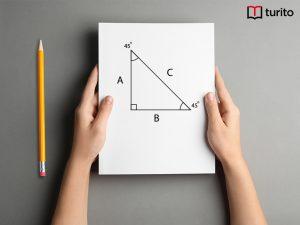
The starting position of the pendulum is called the mean position or equilibrium position labeled as A.
The bob moves to and fro about its mean position labeled as A and rises to extreme positions on both sides labeled as C and B and repeats its motion.
The oscillations gradually die down due to air resistance.
When a body undergoes an oscillatory motion because of the damping due to friction and air resistance and other dissipative forces, the oscillating body eventually comes to rest at its equilibrium position. However, they can be forced to remain oscillating by applying some external force.
Question: 1
Is every periodic motion considered an oscillatory motion?
Answer: 1
Every oscillatory motion is periodic motion, but every periodic motion is not oscillatory motion. In oscillatory motion, a body executes periodic motion about a mean or equilibrium position.

Question: 2
Is there any difference between oscillatory and vibratory motion?
Answer: 2

There is no significant difference between oscillatory and vibratory motion. When the frequency is small, we call it oscillatory motion like the oscillation of a pendulum, while when the frequency is high, we call it vibrational motion like the vibrations of a plucked steel ruler.
Importance of studying oscillatory and vibratory motions:
The study of oscillatory motion is important to understand the function of string instruments like guitar, sitar, or the violin. The membranes in drums and diaphragms in the speaker vibrate to and fro about their mean position.
Atoms and molecules also vibrate inside the solids. The vibrational motion of atoms and molecules is studied to understand the structure of solids.
Summary
- The rectilinear motions and projectile motions are non-repetitive motions.
- The objects in a circular motion or rotational motion execute repetitive motions.
- A periodic motion is a motion that repeats itself after a fixed interval of time.
- A body executes oscillatory motion when it executes to and from or back and forth motion periodically about an equilibrium position.
- Every oscillator motion is periodic, but every periodic motion is not oscillatory.
- There is no significant difference between oscillatory and vibratory motion. When the frequency is small, we call it oscillatory motion, while when the frequency is high, we call it vibrational motion.
Related topics
Velocity Time Graphs – Definition, Examples
Key Concepts 1. Velocity-time graph 2. Slope of v-t graph = acceleration 3. Types of velocity-time graphs 4. Displacement from v-t graphs What is Velocity Time Graph A velocity time graph is a simple graph that shows you how the velocity of an object changes with time. In this graph: It tells us: You can […]

5 Types Of Mechanical Layers Of The Earth
Composition Layer of the Earth When we are studying the layers of the Earth, it can be divided into two ways. One is by how they move, which is the mechanical layers. The other is by what they are made of. This second way involves the composition of layers of the Earth. Based on the […]
Effects of Force: Types, Examples, and Applications
Effects of Force Key Concepts What Is Force? A force comes into play when two or more objects interact with each other. This force when applied to an object by another, gives rise to some kind of change in the state of motion of an object. In this section we will be looking at these […]

Electrical Components and Symbols Explained with Diagrams
What Are Electrical Components? Consider the electrical components as the building blocks of any circuit. These are the actual components that cause electricity to do what you want it to do. Every switch you flip, every fan that spins, every charger that doesn’t overheat relies on these small parts doing their job quietly. You rarely […]


Other topics



Comments: