



Arrays and Partial Products to Multiply

Key Concepts
- Use arrays for partial products
- Use of area for partial products
Introduction:
- In this chapter, we will learn about the introduction of array.
- About partial products
- Use arrays in partial products
- Area of rectangle
- Area for partial products
Use arrays for partial products
Partial products:
A product obtained by multiplying a multiplicand by one digit of a multiplier having more than one digit.
Example: 1
Find the product for 3 × 14.
In the below image indicate using arrays for partial products.

From the above image

The numbers 30 and 12 are called partial products.
42 is the product.
Another way:
14
× 3
______
12 3 × 4 ones
+ 30 3 × 1 tens
_______
42
______
The product 42 is close to the estimate 40. The answer is reasonable.
We can use place value to break factors and distributive property to find partial products.
Example: 2
Multiply 3 × 46

Break 46 into two parts: 40 and 6.
Then, multiply those two parts separately by 3:
3 × 40 is 120, and 3 × 6 is 18.
Then, add these two partial results: 120 + 18 = 138
138 is close to 130
Note: We can use place value to break factors and the distributive property to find the partial products.
Let us see another example:
Find 2 × 124
Estimate:
2 × 124 is about 2 × 100 = 200


Open array:

Here, we can use the distributive property
3 × 14 = (3 × 10) +(3 × 4)
3.4 Use of area for partial products
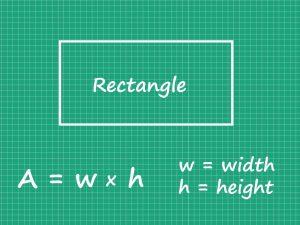
Area is the region bounded by the shape of an object. The space covered by the figure or any geometric shapes is the area of the shape.
Area of rectangle = Length × Breadth
A = lb
Example1:
A park is in the shape of a rectangle. It is 6 feet wide and 24 feet long. What is the area of the park?
6 × 24 is a numerical expression

We can use rectangular area model to show multiplication.
The product of 6 × 24 is the area of the rectangle.
Estimate 6 × 24 is about 6 × 20 = 120

120 + 24 = 144
The distributive property says that the sum of numbers is same as multiplying each part of the sum by that number and adding the partial products.
6 × 24 = (6 × 20) + (6 × 4)
Another way:
2 4
× 6
_________
2 4 6 × 4 ones
+ 1 2 0 6 × 2 tens
_________
1 4 4
The area of the park is 144 square feet.
The product, 144 is close to the estimate of 120. The answer is reasonable.
Example 2:
Find the area of 8 × 24

The picture illustrates the area of a rectangle with sides 8 and 24. It is also divided into two rectangles.
The area of the whole rectangle is 8 × 24 square units.
We can find that by calculating the areas of the two rectangles and adding.
The area of the first rectangle is 8 × 20 = 160 square units.
The area of the second rectangle is 8 × 4 = 32 square units.
So, the area of the whole rectangle is the sum 160 + 32 = 192 square units.
Another way
2 4
× 8
_______________
32 8 × 4
+ 160 8 × 20
_______________
1 9 2
Exercise:
- Solve the following problems using partial products:
a) 87 × 4 b) 78 × 6 c) 32 × 5 - Solve using arrays.
148 × 3 b) 409 × 2 c) 306 × 4 - Explain how can you found the product of 3 and 57.
- Explore different ways to understand multiplying a three-digit number by a one-digit number.
What is the product of 3 and 254? - What will be the cost of gardening a 1 meter broad boundary around a rectangular plot having a perimeter of 340 meters at the rate of Rs. 8 per square meter?
- Draw a model to represent the product.
Then record the product.
a) 3 × 42 b) 8 × 34 c) 2 × 26 - What product does the model below represent?

8. A rectangular room has a length of 16 feet and a width of 8 feet. How much carpet is required to cover the entire room?
9.The length and width of a rectangular farm are 80 yards and 6 yards. Find the area of the farm.
10.Find the total distance around the rectangular field, if the length of the field is 50 meters and width is 8 meters. Also, find the area of the field.
What have we learned:
- Introduction of array.
- Introduction of partial products
- Use arrays in partial products
- Area of rectangle
- Area for partial products
Concept map:


Related topics

Square 1 to 20 : Chart, Table, Perfect Squares and Examples
Square 1 to 20 When you multiply a number by itself, the result is called a square. And when you’re preparing for exams, you need to have a foundation for algebra and quick mental math because you get a really short time to do your exam. Therefore, learning the squares from one to twenty is […]

Square 1 to 40 : Table, Perfect Squares, Chart and Examples
Square 1 to 40 When you multiply a number by itself, the resulting number is a square, and if you are someone who is either appearing in a competitive exam or just wants to do well in math in school, knowing square 1 to 40 is a really important skill. But manually multiplying every time, […]

Square Root : Definition, Formula, Methods and Types Explained
Square Root Square roots are one of those seemingly daunting maths topics that appear in many different situations, from algebra to geometry. Yet the concepts behind them aren’t as hard to grasp. It makes handling numbers far easier if you know the concept well. Let us understand how to find the square roots of a number […]

Cubes 1 to 20 : Chart, Table, Memory Tricks and Examples
Most students don’t struggle much with smaller cubes like 2³ or 3³. Those usually come quickly. The hesitation starts with numbers like 11³ or 17³. Or when someone suddenly asks, what is 20 cubed? That pause is not a memory problem. It’s about the lack of proper understanding and hence confidence. Naturally, learning cubes 1 […]


Other topics



Comments: