



Centimeter And Its Conversions With Examples

Every day, we come across length measurements. In the metric system, we use centimeter to measure the length of small surfaces or objects. Here we will learn about centimeter definition, uses, and the relation between centimeters and other units.
- Centimeter Definition
- Relation between Centimeter and Meter
- Relation Between Centimeter and Inches
- Other Important Relations
- Centimeters for Area and Volume
- Conversion Table
- Applications of Centimeters in Real Life
- Solved Conversion (Centimeter) Examples
- Practice Questions for Unit Conversions
Centimeter Definition
When you observe a ruler, you come across ‘cm’. It stands for centimeter as cm is the abbreviation for centimeter. A centimeter is a unit of length. You will also see ‘centimeter’ is also written as ‘centimetre’. The former is written in American English, while the latter is in British English.
| Origin: The word centimeter originates from the Latin word centum, which means hundred and meter is a French word. The word was first used in 1801 and has been popular ever since. |
What Is a Centimeter?
A centimeter is a unit of measurement for length in the metric system. It is written as cm. when you view a ruler, you will notice that the units are written in “cms” on one side and “inches” on the other. Approximately 0.39 inches are equal to one centimeter.
Relation between Centimeter and Meter
A centimeter is based on the meter unit. It has the prefix “centi” which indicates it is equal to one-hundredth of a meter. Some commonly used metric prefixes are kilo-, mega-, giga-, tera-, centi-, milli-, micro-, and nano-. These help in quickly navigating metrics.
You should also know that meter is the S.I unit of length, while a centimeter is related to meters as follows:

1 cm = 0.01m or 1/100 meters. We can also say that a meter has 100 centimeters.
Relation Between Centimeter and Inches
A centimeter is also comparable to the other units of measurement such as inches. You will also find the two units mentioned on the ruler. Generally, a ruler has one side with markings to measure centimeters, and on the other side, the markings allow measurement in inches. A centimeter is smaller in comparison to inches. So, how many centimeters in an inch? The following relation will help you convert centimeters to inches.
1 centimeter is equal to 0.3937 inches or 1 inch is equal to 2.54 cm.
Thus, we can say that 1 cm is less than half as big as an inch. So, we require about two-and-a-half cm to make one inch.
Other Important Relations
Centimeters can be related to all other units of length measurement. The following popular length unit conversions will help you ace unit conversion problems.
- 1 foot is equal to 30.48 centimeters.
- 1 cm is equal to 10 millimeters (mm)
- 1 cm is equal to 0.00001 kilometers (km)
- 1 yard has 91.44 centimeters.
Centimeters for Area and Volume
- To measure the volume of an object cubic centimeter is used.
- The unit of measurement while calculating the surface area of an object becomes cm2.
- The unit of measurement while measuring the volume of an object becomes cm3.
Conversion Table
The following table for centimeter to meter conversion will help you understand the relation and apply the same while solving problem questions.
| Centimeter [cm] | Meter [m] |
| 0.01 cm | 0.0001 m |
| 0.1 cm | 0.001 m |
| 1 cm | 0.01 m |
| 2 cm | 0.02 m |
| 3 cm | 0.03 m |
| 5 cm | 0.05 m |
| 10 cm | 0.1 m |
| 20 cm | 0.2 m |
| 50 cm | 0.5 m |
| 100 cm | 1 m |
| 1000 cm | 10 m |
Applications of Centimeters in Real Life
There are several applications of centimeters in day-to-day life. Some common applications of centimeters are listed below.
- Ruler: A ruler is the most common geometric tool for the measurement of the length or height of small things. For example, we can measure the length of notebooks, pencils, and so on. Most of the rulers have lengths of 15 cm and 30 cm.
- A meter stick is another commonly used measurement tool. It measures one meter, i.e., 100 centimeters. For example, we use a meter stick to measure the length of a small rope, the width of a room, and so on.
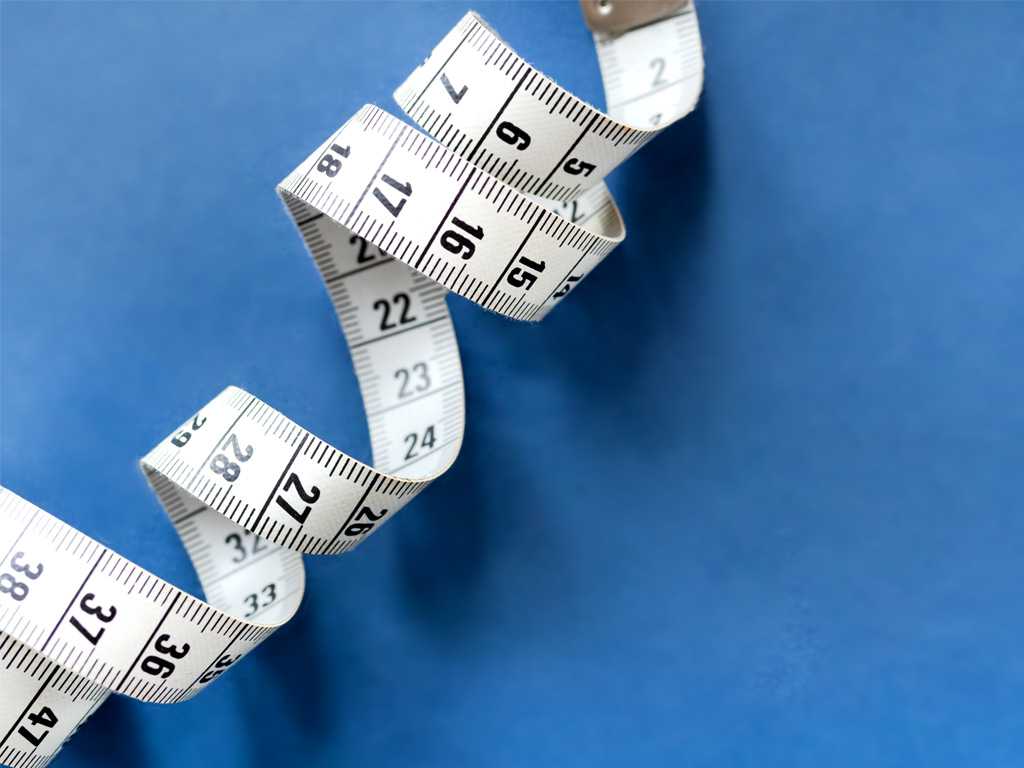
- A measuring tape is a flexible ruler. It allows us to measure the length of curved objects such as ribbons, rings, clothes, and so on.
- The waist size of a pair of jeans.
- The radius of a car’s tires.
- To measure rainfall using a rain gauge.
- We use the CGS system for the measurement of light, force, and others.
- Height is popularly measured in cm’s in America.
- Screen size is also measured in cm’s.
Solved Centimeter Examples
The following solved examples will help you understand the conversion of units.
Example 1: Convert 96 meters into centimeters.
Answer: 1 meter is equal to 100 centimeters.
So, 96 meters will be 96 × 100 = 9600 cm.
Example 2: Convert 111 yards into centimeters.
Answer: 1 yard is equal to 91.44 centimeters.
So, 111 yards will be 111 × 91.44 = 10,149.84 centimeters.
Example 3: Convert 48 centimeters to meters.
Answer: 1 cm is equal to 0.01.
So, 48 cm will be 48 × 0.01 = 0.48 m.
Example 4: Convert 151 centimeters to feet.
Answer: 1 cm is equal to 0.033 feet
Sp, 151 cm will be 151 × 0.33 = feet
Example 4: Emma purchased a 24 m 25 cm ribbon and Bella purchased a 17 m 15 cm ribbon. What is the total length of the ribbons both of them purchased?
Solution: Length of ribbons purchased by Emma = 24 m 25 cm
Length of ribbons purchased by Bella = 17 m 15 cm
The total length of ribbons purchased by them = 24 m 25 cm + 17 m 15 cm
= 41 m 40 cm
Example 5: Subtract 10 m 15 cm from 26 m 95 cm.
Answer: Firstly, we will arrange meters and centimeters in separate columns.
Then we will subtract 15 cm from 95 cm and write it in the centimeter column.
95 cm – 15 cm = 80 cm
Next, we will subtract 10 m from 26 m and write it in the meter column.
26 m – 10 m = 16 m
m cm
36 95
– 20 15
16 80
The answer is 16 m 80 cm.
Example 6: Sarah bought 10 m 75 cm of cloth. She used 5 m 30 cm to make her dress from it. Calculate the length of cloth left.
Solution: Total length of cloth Sarah bought = 10 m 75 cm.
Length of cloth she used = 5 m 30 cm.
Therefore, the length of cloth left = 10 m 75 cm – 5 m 30 cm
= 5 m 45 cm
Example 7: Peter plans to fence the park in front of his house on four sides. The sides measure 150 m 40 cm, 200 m 10 cm, 300 m 39 cm, and 250 m 10 cm. Find the total length that Peter will fence.
Solution: The length of the sides is as follows:
Side 1: 150 m 40 cm
Side 2: 200 m 10 cm
Side 3: 300 m 39 cm
Side 4: 250 m 10 cm.
The total length that Peter will fence= side 1 + side 2+ side 3 + side 4
= 150 m 40 cm + 200 m 10 cm + 300 m 39 cm + 250 m 10 cm
= 900 m 99 cm
Example 8: James used 1 m 50 cm of pink ribbon and 4 m 28 cm of red ribbon to make a flower. How many ribbons did he use in total?
Answer: Total ribbon used by James = pink ribbon + red ribbon
= 1 m 50 cm + 4 m 28 cm
= 5 m + 78 cm.
| Practice Problems Question 1: Convert the following as given: a. 55 m into cm b. 23.5 m into cm c. 34 feet in cm d. 98 cm in feet, e. 325 km in cm f. 51 cm in km g. 67 yards in cm h. 56 cm in yard Question 2: Subtract the following: a. 11 m 25 cm – 4 m 16 cm b. 345 m 56 cm – 246 m 16 cm Question 3: Maria purchased a 70 m 21 cm long rope, and John purchased 18 m 350 cm long rope. What is the total length of the ropes bought by both of them? Question 4: Ronald rides his cycle 10 km per day. How many meters and centimeters does he cycle in a day? Question 5: In a Javelin throw competition, an athlete from England threw the javelin up to a distance of 650 cm. How many meters away did he throw the javelin? Question 6: Mr Jacob bought a cloth of length 3690 cm. Calculate the length of the cloth in m and cm?Question 7: One box is 54 cm 10 mm tall. Another box is 55 cm tall. How tall will the boxes be if they are stacked one on top of the other? Question 8: A building was caught on fire. During the fire, Gary, the fireman, needs to reach the window at the height of 697 m. The length of the ladder is 340 m 84 cm. How much length is still required by Gary to reach the window? |
Related topics

Square 1 to 20 : Chart, Table, Perfect Squares and Examples
Square 1 to 20 When you multiply a number by itself, the result is called a square. And when you’re preparing for exams, you need to have a foundation for algebra and quick mental math because you get a really short time to do your exam. Therefore, learning the squares from one to twenty is […]

Square 1 to 40 : Table, Perfect Squares, Chart and Examples
Square 1 to 40 When you multiply a number by itself, the resulting number is a square, and if you are someone who is either appearing in a competitive exam or just wants to do well in math in school, knowing square 1 to 40 is a really important skill. But manually multiplying every time, […]

Square Root : Definition, Formula, Methods and Types Explained
Square Root Square roots are one of those seemingly daunting maths topics that appear in many different situations, from algebra to geometry. Yet the concepts behind them aren’t as hard to grasp. It makes handling numbers far easier if you know the concept well. Let us understand how to find the square roots of a number […]

Cubes 1 to 20 : Chart, Table, Memory Tricks and Examples
Most students don’t struggle much with smaller cubes like 2³ or 3³. Those usually come quickly. The hesitation starts with numbers like 11³ or 17³. Or when someone suddenly asks, what is 20 cubed? That pause is not a memory problem. It’s about the lack of proper understanding and hence confidence. Naturally, learning cubes 1 […]


Other topics



Comments: