



Factoring x² + bx + c

Key Concepts
- Understand factoring a trinomial
- Factor x2 + bx + c, when b < 0 and c < 0
- Factor x2 + bx + c, when c <0
- Factor a trinomial with two variables
- Apply factoring trinomials
Understand factoring a trinomial
Concept
1. How does factoring a trinomial relate to multiplying binomials?
Consider the binomial product (x + 2) (x + 3) and the trinomial x2 + 5x + 6.

When factoring a trinomial, you work backward trying to find the related binomial factors whose product equals the trinomial.
You can factor the trinomial of the form x2 + bx + c as (x + p) (x + q) if pq = c and p + q = b.
2. What is the factored form of x2 + 5x + 6?

Identify a factor pair of 6 that has a sum of 5.

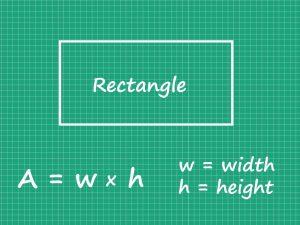
If you factor using algebra tiles, the correct factor pair will form a rectangle.

The factored form of x2 + 5x + 6 is (x + 2) (x + 3).
The first term of each binomial is x, since x * x = x2
Check (x + 2) (x + 3) = x2 + 3x + 2x + 6 = x2 + 5x + 6
Factor x2 + bx + c, when b < 0 and c > 0
What is the factored form of x2 – 11x + 18?
Identify a factor pair of 18 that has a sum of -11.

The factored form of x2 – 11x + 18 is (x – 2)(x – 9).
Check (x – 2) (x – 9) = x2 – 9x – 2x + 18 = x2 – 11x + 18
Factor x2 + bx + c, when c < 0
What is the factored form of x2 + 5x – 6?
Identify a factor pair of -6 that has a sum of 5.

The factored form of x2 + 5x – 6 is (x – 1) (x + 6).
Factor a Trinomial with Two Variables
Concept
1. How does multiplying binomials in two variables relate to factoring trinomials?
Consider the following binomial products.
(x – 2y) (x + 4y) = x2 + 6xy + 8y2
(x – 3y) (x + 5y) = x2 + 2xy – 15y2
(x – 7y) (x – 9y) = x2 – 16xy – 63y2
Each trinomial has the form of x2 + bxy + cy2. Trinomials of this form are factorable when there is a factor pair of c that has a sum of b.
2. What is the factored form of x2 + 10xy + 24y2?
Identify a factor pair of 24 that has a sum of 10.
The factored form of x2 + 10xy + 24y2 is (x + 4y) (x + 6y).
Check (x + 4y) (x + 6y) = x2 + 6xy + 4xy + 24y2 = x2 + 10xy + 24y2
Apply Factoring Trinomials
1. Example
Benjamin is designing a new house. The bedroom closet will have one wall that contains a closet system using three different-sized storage units. The number and amount of wall space needed for each of the three types of storage units is shown. What are the dimensions of the largest amount of wall space that will be needed?

Solution:
Formulate:
The largest possible closet system will use all of the units. Write an expression that represents the wall area of the closet in terms of the storage units.
x2 + 12x + 35
Compute:
Because the area of the rectangle is the product of the length and the width, factor the expression to find binomials that represent the length and the width of the closet wall.

x2 + 12x + 35 = (x + 5) (x + 7)
Interpret:
The dimensions of the largest amount of wall space that will be needed are (x + 7) ft. by (x + 5) ft.
Questions
Question 1
Write the factored form of each trinomial.
1. x2 + 13x + 36
Factors of 36 are 9 and 4.
And the sum of 9 and 4 is 13.
(x + 9) (x + 4)
2. x2 – 8x + 15
Factors of 15 are -3 and -5.
And the sum of (-3) and (-5) is (-8).
(x – 3) (x – 5)
3. x2 – 5x – 14
Factors of -14 are 2 and -7.
And the sum of 2 and (-7) is -5.
(x + 2) (x – 7)
4. x2 + 6x – 16
Factors of -16 are 8 and -2.
And the sum of 8 and -2 is 6.
(x + 8) (x – 2)
5. x2 + 12xy + 32y2
Factors of 32 are 8 and 4.
And the sum of 8 and 4 is 12.
(x + 8y) (x + 4y)
Question 2
In the last example mentioned on the page – 4, what would be the dimensions of the largest wall you would need, if you used 11 of the 1 ft-by-1 ft units while keeping the other units the same?
Solution:
Formulate: Write an expression that represents the wall area of the closet in terms of the storage units.
x2 + 12x + 11
Compute: Because the area of the rectangle is the product of the length and the width, factor the expression to find binomials that represent the length and the width of the closet wall.
Factors of 11 are 11 and 1.
And the sum of 11 and 1 is 12.
So, x2 + 12x + 11 = (x + 11) (x + 1)
Interpret: The dimensions of the largest amount of wall space that will be needed are (x + 11) ft. by (x + 1) ft.
Key Concepts Covered
To factor a trinomial of the form x2 + bx + c, find a factor pair of c that has a sum of b. Then use the factors you found to write the binomials that have a product equal to the trinomial.

Exercise
Factor the following trinomials:
- x2+9x+20
- x2+8x+12
- x2-7x-18
- x2-6x+9
- x2+ 2xy + y2
- x2-18x+81
- 3x2+ 39x-90
- x2– 6xy + 9y2
- x2-x-6
- x2– 13x – 30
Related topics

Square 1 to 20 : Chart, Table, Perfect Squares and Examples
Square 1 to 20 When you multiply a number by itself, the result is called a square. And when you’re preparing for exams, you need to have a foundation for algebra and quick mental math because you get a really short time to do your exam. Therefore, learning the squares from one to twenty is […]

Square 1 to 40 : Table, Perfect Squares, Chart and Examples
Square 1 to 40 When you multiply a number by itself, the resulting number is a square, and if you are someone who is either appearing in a competitive exam or just wants to do well in math in school, knowing square 1 to 40 is a really important skill. But manually multiplying every time, […]

Square Root : Definition, Formula, Methods and Types Explained
Square Root Square roots are one of those seemingly daunting maths topics that appear in many different situations, from algebra to geometry. Yet the concepts behind them aren’t as hard to grasp. It makes handling numbers far easier if you know the concept well. Let us understand how to find the square roots of a number […]

Cubes 1 to 20 : Chart, Table, Memory Tricks and Examples
Most students don’t struggle much with smaller cubes like 2³ or 3³. Those usually come quickly. The hesitation starts with numbers like 11³ or 17³. Or when someone suddenly asks, what is 20 cubed? That pause is not a memory problem. It’s about the lack of proper understanding and hence confidence. Naturally, learning cubes 1 […]


Other topics



Comments: