



Learn to Find Common Denominators Easily Grade 5

Key Concepts
- Equivalent fractions and common denominators
- Finding common denominators
Introduction
In this chapter, we will learn about common denominators, finding equivalent fractions and finding common denominators.
Common denominator
If two or more fractions have the same number as the denominator, then we can say that the fractions have a common denominator.
Let us understand the common denominator in detail:

In this pizza, there are 4 slices. Thus, it is represented as 1, that is, a whole.
If we take away one slice, we have 3 out of 4 slices remaining.



If we take away two slice, we have 2 out of 4 slices remaining.

If we take away three slices, we have 1 out of 4 slices, remaining.
In the above examples, we can understand that the same number is used as denominator.

Equivalent fractions and common denominators
Let us learn how to estimate the sum of two fractions.
Example 1:
Julie planted two 1-acre gardens. One had three sections of flowers, and the other had four sections of flowers. She plans to divide both gardens into more sections in order that they need an equivalent number of equal-sized sections. How many sections will each garden have?
Solution:
If you represent the gardens with pictures, they will be like,

Garden 1 Garden 2

Divide each 1/3 into fourths
Divide each 1/4 into thirds
Each of the wholes will be divided into the same size parts, twelfths.
- Garden 1
- Garden 2

So, both garden will have 12 sections.
Finding common denominators
Let us learn how to determine a common denominator?
Example 1:
- Determine a common denominator for 2/3 and 1/2.
- Determine equivalent fractions for 2/3 and 1/2 using the common denominator from a).
Solution:
Method 1: Use Paper Folding or Diagrams
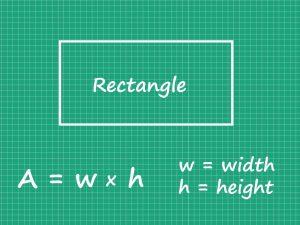
a) Divide a rectangle into 3 equal parts. Either fold a piece of paper or draw a rectangle.
Fold the paper or divide the rectangle into 2 equal parts the other way.
There are 6 parts in the rectangle.
A common denominator for 2/3 and 1/2 is 6.

b) Shade 2/3 of the rectangle red.
4 of the 6 parts are red.
2/3 = 4/6

Turn the paper over, or draw another rectangle and divide it as in step a).
Shade 1/2 of this rectangle blue.
3 of the 6 parts are blue.
1/2 = 3/6

Method 2: Use multiples
a) The denominator of 1/2 is 2.
Multiples of 2 are 2, 4, 6, 8, 10, 12, …
The denominator of 2/3 is 3.
Multiples of 3 are 3, 6, 9, 12, 15, …
The first multiple divisible by both 2 and 3 is 6.
A common denominator is 6.
b) Write equivalent fractions using 6 as the denominator.

To determine equivalent fractions, multiply the numerator and denominator by the same number. This process does not change the value of the fraction.

Exercise
- Ian says, “A common denominator for and 3 is 12”, Mike says,“ agree with lan or Mike? Why?
- Tina wanted to find a common denominator and equivalent fractions for 2 and 2. This is
what she did

a) Was she correct? If not, what was her error?
b) Draw diagrams to show what she should have done.
- Use multiples to find a common denominator for the fractions 2,2, and 2?
- Use the folded papers shown to determine a common denominator and equivalent fractions for the given pair of fractions.

- Use the folded papers shown to determine a common denominator and equivalent fractions for the given pair of fractions.

- Look at the diagrams to determine a common denominator and equivalent fractions for the given pair of fractions

- Look at the diagrams to determine a common denominator and equivalent fractions for
the given pair of fractions.

- Fill in the blanks to make equivalent fractions.
- 1/4 = ?/8 =?/12 = ?/16 = ?/20 = ?/24 = ?/28
- Fill in the blanks to make equivalent fractions
- 24/56 = 12/? = 6/? = 3/? = 48/? = 9/?
- A cookie recipe calls for > cup of brown sugar and = cup of walnuts. Find the least
common denominator of the fractions used in the recipe.
Concept Map

What have we learned
- Understand common denominator
- Find equivalent fractions
- Find common denominator for two or more fractions
Related topics

Square 1 to 20 : Chart, Table, Perfect Squares and Examples
Square 1 to 20 When you multiply a number by itself, the result is called a square. And when you’re preparing for exams, you need to have a foundation for algebra and quick mental math because you get a really short time to do your exam. Therefore, learning the squares from one to twenty is […]

Square 1 to 40 : Table, Perfect Squares, Chart and Examples
Square 1 to 40 When you multiply a number by itself, the resulting number is a square, and if you are someone who is either appearing in a competitive exam or just wants to do well in math in school, knowing square 1 to 40 is a really important skill. But manually multiplying every time, […]

Square Root : Definition, Formula, Methods and Types Explained
Square Root Square roots are one of those seemingly daunting maths topics that appear in many different situations, from algebra to geometry. Yet the concepts behind them aren’t as hard to grasp. It makes handling numbers far easier if you know the concept well. Let us understand how to find the square roots of a number […]

Cubes 1 to 20 : Chart, Table, Memory Tricks and Examples
Most students don’t struggle much with smaller cubes like 2³ or 3³. Those usually come quickly. The hesitation starts with numbers like 11³ or 17³. Or when someone suddenly asks, what is 20 cubed? That pause is not a memory problem. It’s about the lack of proper understanding and hence confidence. Naturally, learning cubes 1 […]


Other topics



Comments: