



Multi-Step Problems with Fractions and Decimals

Key Concepts:
- Solve multi-step problems with fractions
- Solve multi-step problems with decimals
Introduction:
Use the following steps to solve the rational numbers problems:
Step 1: Decide the steps to be used to solve the problem.
Step 2: Use the correct operation.
Step 3: Identify the required information from the problem.
Step 4: Use the correct information.

Step 5: Perform accurate calculations.
Step 6: Simplify the solution and check the reasonableness.
1.7.1 Solve multi-step problems with fractions
Example 1: Victor wants to build a horse-riding arena near his home. He decided to use 3 rows of wood planks of 8 ¹∕₂ feet long, to fence around the arena. He ordered 130 wood planks from a local lumberyard. Find whether Victor ordered enough wood planks to build the arena.

Solution:
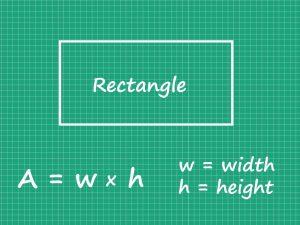
The given arena is in a rectangular shape.
First, find the perimeter of the arena.
Perimeter = 2(l + b)
Given, length =120 ¹∕₂ feet
Breadth = 66 ¹∕₄

= 2 x 120 ¹∕₂ + 2 x 66 ¹∕₄

= 373 ¹∕₂ feet
Victor needs enough wood planks for 3 times the perimeter.
i.e., 3 × 373 ¹∕₂ = 1,120 ¹∕₂ feet.
Now, divide to find the number of 8 ¹∕₂ foot long planks needed.

=2241/2 x 2/17
=4482/32 or 131 ¹⁴∕₁₇
= 4482/34 or 131 ¹⁴∕₁₇
So, Victor needs 132 wood planks to build the fencing. He did not order enough wood planks.
Example 2: A fruit seller sells oranges at the rate of $ 5¹∕₄ per orange, he gets $630 by selling the oranges. How many dozens of oranges does he sell?
Solution:
Selling price of one orange = $ 5¹∕₄ = 21/4
Total amount he earns = $630
So, total oranges sold by him = 630 ÷ 21/4
= 30 × 4
= 120 oranges
Now, we have to find the number of dozens he sold.
1 dozen = 12
He sold 120 oranges. So, the number of dozens he sold = 120/12 = 10.
1.7.2 Solve multi-step problems with decimals
Example 1:
Smith bought 7 liters of milk. He fills the milk equally into 5 bottles. 0.25 liter of milk is left. Find the volume of milk in 1 bottle?
Solution:
Step 1: Find the total volume of milk in 5 bottles.

7 – 0.25 = 6.75
The total volume of milk in 5 bottles was 6.75 liters.
Step 2: Find the volume of milk in 1 bottle.

6.75 ÷ 5 = 1.35
The volume of milk in 1 bottle was 1.35 liters.
Example 2:
Nancy buys 3.17 pounds of apples, 1.25 pounds of pears, and 2.56 pounds of oranges. Find the total bill rounded to the nearest cent.

Solution:
Given
Apples = 3.17 pounds.
Pears = 1.25 pounds.
Oranges = 2.56 pounds.
The prices of the fruits are,
Apples = 3.17 × 1.09 = $3.450
Pears = 1.25 × 0.99 = $1.240
Oranges = 2.56 × 1.19 = $3.050
Total bill = 3.450 + 1.240 +3.050 = $7.74.
1 dollar = 100 cents
7.74 dollars rounds to nearest cent = 8 dollars
Therefore, the total bill rounded to nearest cent= 8 dollars.
Example 3: Sam wants to build the fencing of 3.4 meters by 6.5 meters around his garden. If the cost of the fencing is $2.25 per meter, find the total cost to fence Sam’s Garden.
Solution:
Let the garden be in a rectangular shape. Find the perimeter of the garden.
Perimeter = 2 (l+b)
Given, length = 3.4 meters and breadth = 6.5 meters.
P = 2 (3.4 + 6.5) = 2(9.9) = 19.8 meters.
Cost of the fencing = $2.25 per meter.
Total cost of the fencing = 19.8 × 2.25 = $44.55.
Exercise:
- If the cost of 8 ¼ kg of grapefruits is $400. Find the cost of grapefruits per kg?
- The organizers collected a total of $6496 in a charity show by selling tickets. If each ticket costs $ 50 ³∕₄, how many tickets were sold?
- Adam has ²∕₃ cup of yogurt. If he wants to serve ¹∕₆ cup of yogurt. How much yogurt is left with him?
- If Shane scored 382.65 marks out of 500 in an examination. How many marks did he lose?
- John has 2.30 liters of cold drink. He pours the drink equally in 9 glasses. Find the volume of the drink in each glass.
- How many ½ inch pieces can be cut from a metal sheet of ⁷∕₆ inch long?
- Warner wants to make a 3 feet long cardboard box. He plans to make another box with ²∕₃ feet long. How many boxes does he make?
- Nathan has ½ part of a cake with him. If he decides to share the cake equally among 3 of his friends. How much cake will each person get?
- The owner of the water plant uses 15 ½ gallons of water every day to fill the bottles. If he fills 5 ⁵∕₆ gallons of water in each bottle, how many bottles did he fills the water?
- A student buys 5 pounds of pears and pays a bill of $8. How much remaining amount does the student receive?
What have we learned:
- Solve the multi-step problems with fractions.
- Solve the multi-step problems with decimals.
- Solve the real-world application problems.
- Solve the word problems with fractions.
- Solve word problems with decimals.
Summary:
Solving multi-step problems with fractions or decimals:
1. Decide the steps to be used to solve the problem.
2. Use the correct operation.
3. Identify the required information from the problem.
4. Use the correct information.
5. Perform accurate calculations.
6. Simplify the solution and check the reasonableness.
Related topics

Square 1 to 20 : Chart, Table, Perfect Squares and Examples
Square 1 to 20 When you multiply a number by itself, the result is called a square. And when you’re preparing for exams, you need to have a foundation for algebra and quick mental math because you get a really short time to do your exam. Therefore, learning the squares from one to twenty is […]

Square 1 to 40 : Table, Perfect Squares, Chart and Examples
Square 1 to 40 When you multiply a number by itself, the resulting number is a square, and if you are someone who is either appearing in a competitive exam or just wants to do well in math in school, knowing square 1 to 40 is a really important skill. But manually multiplying every time, […]

Square Root : Definition, Formula, Methods and Types Explained
Square Root Square roots are one of those seemingly daunting maths topics that appear in many different situations, from algebra to geometry. Yet the concepts behind them aren’t as hard to grasp. It makes handling numbers far easier if you know the concept well. Let us understand how to find the square roots of a number […]

Cubes 1 to 20 : Chart, Table, Memory Tricks and Examples
Most students don’t struggle much with smaller cubes like 2³ or 3³. Those usually come quickly. The hesitation starts with numbers like 11³ or 17³. Or when someone suddenly asks, what is 20 cubed? That pause is not a memory problem. It’s about the lack of proper understanding and hence confidence. Naturally, learning cubes 1 […]


Other topics



Comments: